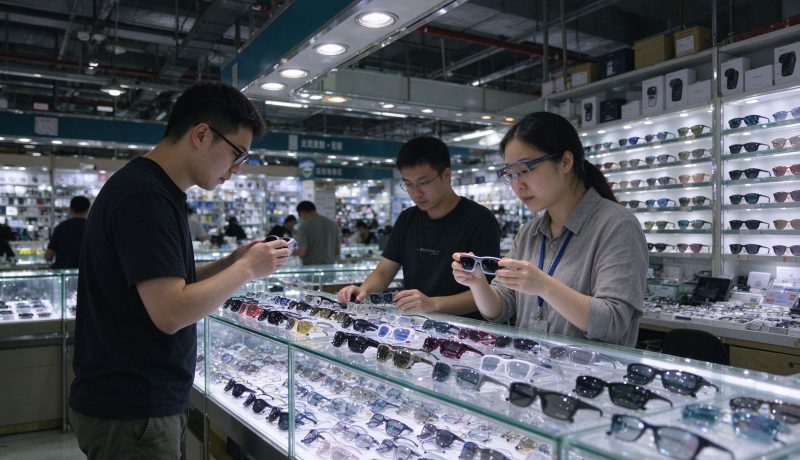
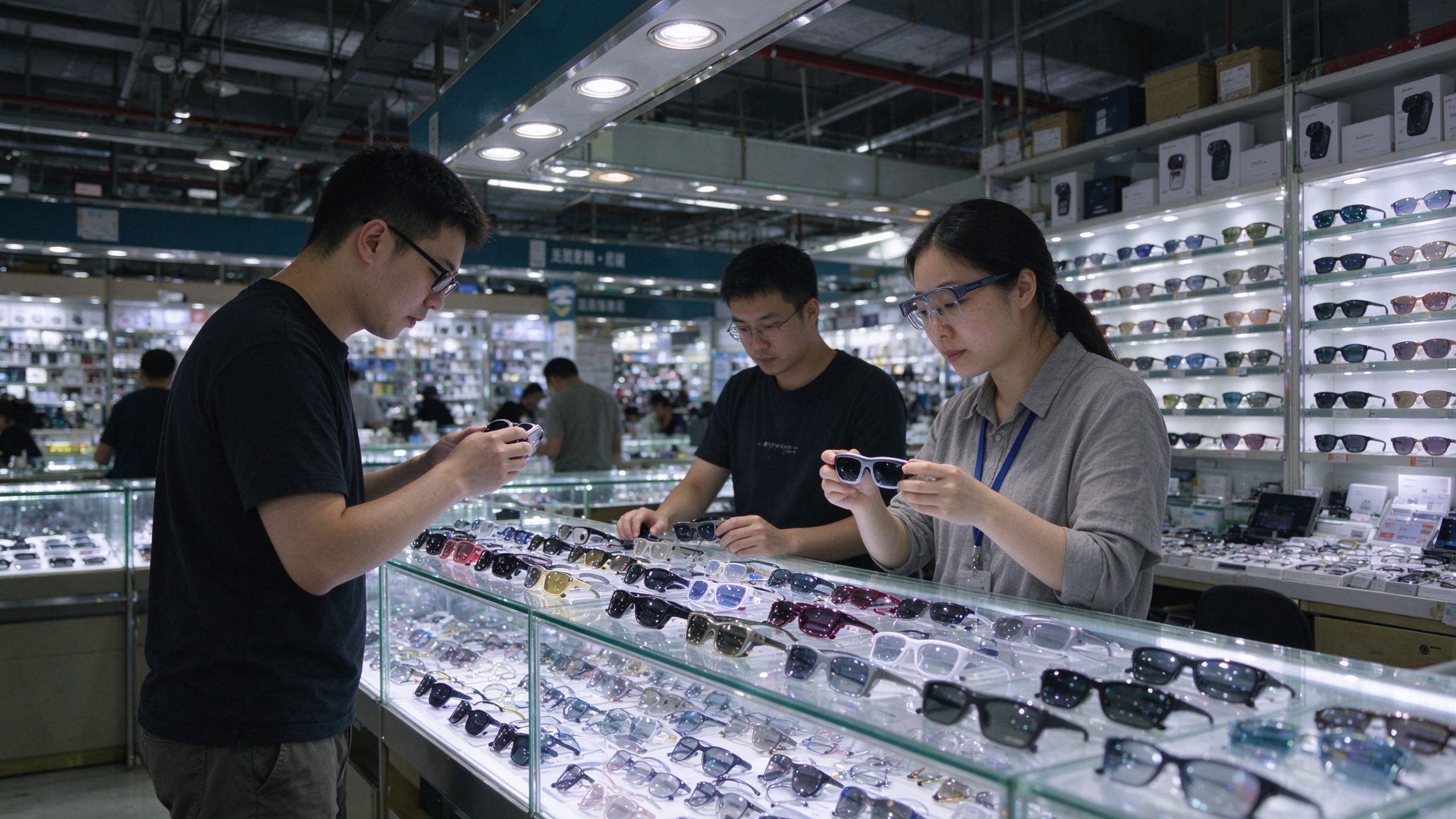
For two decades, a walk through Huaqiangbei meant cables, chargers, phone parts and Bluetooth earbuds. That is no longer what the counters sell. According to figures released by the Huaqiangbei Sub-district office, AI products accounted for 61 percent of electronics sold in the district as of July 2026, up from 41 percent in 2025 – the sharpest product-mix shift the market has recorded.
The same data set shows AI product sales across all categories in the district up more than 55 percent year on year for January to July 2026. AI glasses doubled in volume. Drones and robots grew 60 to 70 percent. Behind those numbers sits a larger export picture: Shenzhen Customs reports high-tech imports and exports of RMB 1.7 trillion in the first half of 2026, the highest of any city in China, with AI-related products alone passing RMB 1 trillion and growing more than 50 percent.
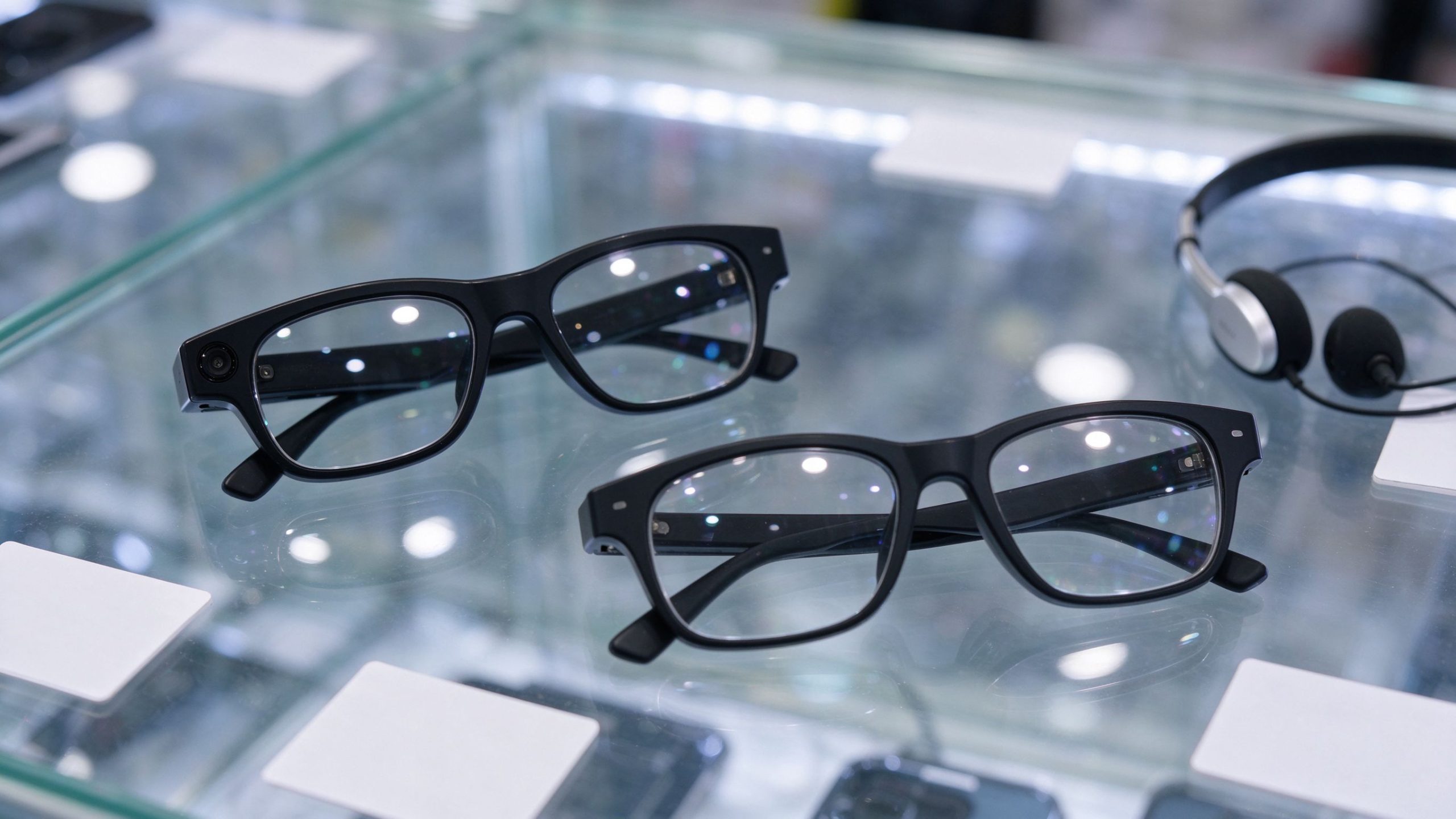
The physical reason is scale. The core business district covers 1.45 square kilometers and holds 35 electronics markets, more than 110,000 component types and over 115,000 registered business entities. Buyers describe the result as a “one-kilometer supply chain”: more than 100 component types can be sourced in a single day, a sample can be built within a week, and custom parts that once took two months now reach testing in seven days.
Speed is what pulls the orders. Roughly 8,000 foreign buyers visit the district each day, and one local maker of AI glasses told state media that it now ships 4,000 to 5,000 units a month, 95 percent of them for export, with India its largest market and Russia and Spain growing this year.
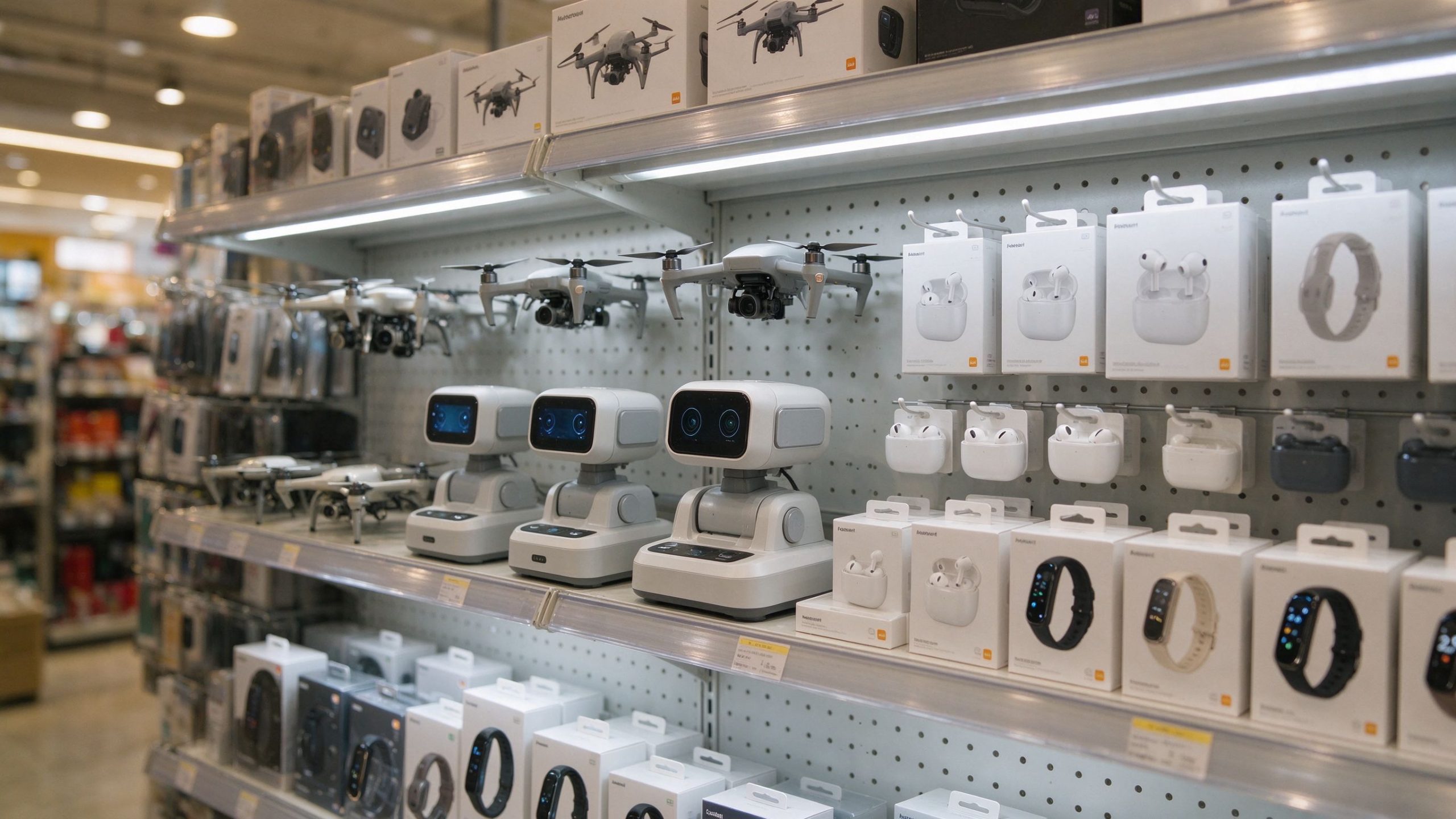
The shift is not frictionless. RUNTO Technology puts return rates for AI glasses at about 30 percent on Chinese e-commerce platforms and 40 to 50 percent in livestream channels, where low-cost white-label units often deliver AI features that only work through a phone app. Online sales on the three major platforms fell 15.3 percent year on year in July 2026, even as display-equipped AR glasses grew 72.7 percent – a sign that buyers reward products that deliver the functions they advertise.
For overseas importers, the practical reading is narrow: the supply base has already re-weighted toward AI hardware, lead times are measured in days rather than quarters, and the difference between a repeatable product line and a one-off shipment now comes down to verifying whether the AI runs on the device rather than in the app.